


Follow to lead - part 1

23
Jun 2023
275
A group of paper airplanes are flying up in the air.

Author: Aneesha Ugwoke (she/her) is currently a leader with Farm Credit Canada, CPHR Alberta member, and an anti-racism specialist. 

At FCC, our leaders are truly the secret sauce to inward and outward success because they are genuinely people-centric.  As we ebb and flow through our DEI efforts, I see HR professionals and leaders navigate and drive respectively (as we should). 

When I think about impacts, the ‘ shoulds ’ compel me to challenge my own inclusive leadership.  I’ve come to experience success in followership when leading those who have different lived experiences than me because they challenge me to seek solutions that are unprecedented or don’t fit current paradigms. 

Rather than directing, I’m being directed by those who seek equity.

Certainly, to let followership ensue, you must:
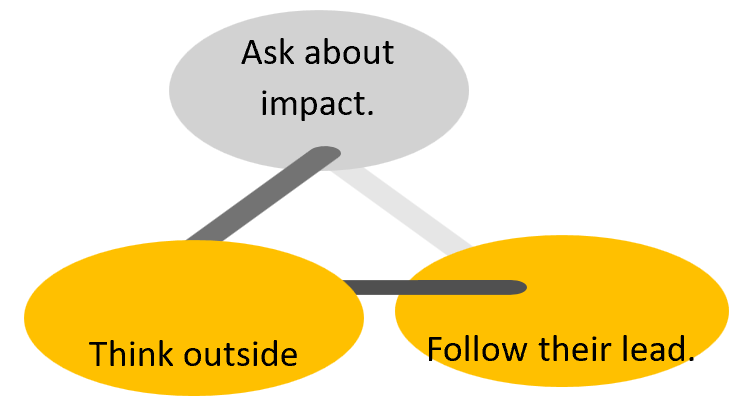
A diagram that says ask about impact think outside follow their lead

These approaches may seem obtuse, but that’s assuming that we all have the same experiences and needs, which is simply untrue.  To operate more effectively with those who aren’t like us, w e need to reassert and redeploy our humanness.    We need to feel more un-stuck from the rut of not knowing ‘how-to’.  Ultimately, as leaders and HR professionals, we need to raise the bar so that felt change inevitably leads to tangible change.   


WE NEED TO ASK THOSE WHO MATTER.


Here’s another ‘ should’ :  When making DEI decisions that impact the system, should we uphold business outcomes or employee experience?  I’d ask you to first consider why it must be an either/or question.  Compare this to the chicken and egg parable.  Reflect on external impacts created by followership to vendors, potential future employees, customers, and competitors versus enclosed internal impacts only.

At the risk of sounding offensive…at times, could the business and policies be excuses to the real roadblock; you? 

In other words, I don’t ask to call you out but to draw you in to remind you of your good intent and goal.

You have an employee who is asking for an allowance that isn’t within the parameter of that policy.  Do you grant an exception, help identify the inequity, or decline with a soft alternative?

How do you tackle a choice between hiring for diversity and hiring for inclusivity; or hiring for skill vs experience; or hiring for the almighty Canadian experience? 

Are there decisions that you could make that help you pilot an unprecedented initiative? (So that you tackle your fear of going into unchartered territory carefully and make thoughtful decisions that have been tested?)

Is it possible to seek partnerships with other leaders who could be on a hiring panel with you so that your biases can be challenged?

Could you talk about allyship intermittently in your team meetings? 

Are your surveys giving you the entire picture, or are they responses to the few questions you asked?  The responses could be true and valid but represent only a small bite of the entire pie.

Is it reasonable to offer flexible hours to someone participating in fasting or someone who cannot afford or find childcare easily? 

Do you offer advice that doesn’t resonate with someone who practices a lifestyle with cultural nuances?  50-50 households are not ubiquitous to all cultures, all households, all women.  In my culture, you do marry the family and sometimes live with them in the same house.  In my case, sympathy for upholding all responsibilities devalues my culture, my values. 

Undoubtedly, support is being offered.  And to level up, employee assistance programs don’t cater to all needs.  Through no fault of those case workers, services aren’t expansive enough for all needs.  The case workers themselves don’t resonate with struggles that are particular to identities  This isn’t because they lack expertise but because they may not have the same lived experience as others from more diverse backgrounds.

For followership to prevail, I’m not suggesting that you let others make important decisions that you were hired for.   Instead, let’s keep that individual’s success in mind as the north star, your decisions will inevitably illustrate your authenticity and enable trust for inclusivity. 

Luckily, these are the perpendicular and parallel synergies of leaders and HR professionals that I get to watch daily.  


BUT EVEN GREATNESS CAN BE ELEVATED.


The views and opinions expressed in this blog post belong solely to the original author(s) and do not necessarily represent the views and opinions of CPHR Alberta.



The views and opinions expressed in this blog post belong solely to the original author(s) and do not necessarily represent the views and opinions of CPHR Alberta.



By Jessica Jaithoo March 16, 2026
Author: Rheya Patel, 2026 Social Media Committee Member As days become longer and the weather warms up, the first day of spring brings a sense of renewal and new beginnings. A time that feels more energizing and people are more motivated to reset their routines, look for new opportunities and clear away old habits. While spring is commonly associated with “spring cleaning” in the home, perhaps the same principal can be applies to the workplace. For organizations and HR groups, spring can be the perfect opportunity to encourage employees to reflect and construct new meaningful goals and “clean” out the “clutter” of goals that no longer help them grow or have already been achieved. Why is Spring the Perfect Time for Goal Setting? With the rush of returning to work after the holidays and resuming normal life, spring gives a perfect moment to pause and reflect. Employees can check on their progress, realign priorities and continue the year with renewed motivation. For HR teams, encouraging this reflection can re-engage employees and increase motivation. In turn, employees are more likely to be focused and productive while creating a space for meaningful conversations about growth, development, and career progression. How Can We Encourage Goal Reflection? Believe it or not, HR plays a crucial role in goal setting whether it is realized or not. Creating an open work environment where employees feel supported and encouraged with professional development is key in reflection and goal setting. Below are several ways organizations can use the season of renewal to inspire growth and goal setting. Encourage Reflection What accomplishments have employees made that they are proud of? What challenges have they faced? Asking these kind of questions and having one-on-one check-ins with employees can help support employees to openly discuss their goals and aspirations, and potentially create new goals. Promote Professional Development and Growth The arrival of spring can also create the chance to introduce new learning opportunities. Having a fresh mindset combined with training, workshops, mentorship initiatives, or skill-building programs, employees can feel more motivated and supported in pursuing growth.  This helps employees expand their skillsets and strengthen the organization as a whole. Foster Collaboration and New Ideas Tying back to renewed energy, organizations can encourage teams to collaborate and share new ideas. Brainstorming sessions, innovation workshops, or team goal-setting can foster inspiration and connectivity, Having an open space for discussions can help teams align goals with organizational priorities to promote innovation and productivity. Celebrate Progress Recognizing progress along the way is essential. Celebrating achievements and acknowledging progress have a significant impact on employee morale. Employee recognition programs, team shoutouts, or words of appreciation can go a long way to remind employees how valuable their efforts and contributions are and continue to motivate them to strive towards their goals. Final Thoughts The arrival of spring represents renewal, growth, and new possibilities. For HR professionals, it’s also the opportunity to encourage employees to pause, reflect, and move through the rest of the year with renewed purpose. Encouraging goal setting, promoting professional development, fostering collaboration, and celebrating progress, can tie the season of newness to inspire meaningful growth. The new season reminds us that progress doesn’t need to start January 1st. Sometimes, a change in perspective, and a little springtime inspiration, can be the step towards pursuing new goals and growth with confidence.
March 16, 2026
As the governing voice of CPHR Alberta, the Board of Directors meets quarterly to provide oversight and guidance in several key areas. The Board, alongside CPHR Alberta operations, have began delivery on the association's new strategic priorities developed in the 2026-2028 strategic plan. To ensure transparency between our Board of Directors, members and key stakeholders, we are sharing post-meeting messages to inform the steps taken towards advancing our profession and ensuring a financially stable association. The Board of Directors met on March 14, 2026 to review organizational performance, governance matters, and strategic priorities for the coming year. The Board’s key messages for the membership are as follows: Strong Association Performance in 2025 The Board reviewed the 2025 year-end financial statements and Q4 Management Discussion & Analysis. Key highlights include: 7,332 active members in 2025 (+409), a 6% year-over-year increase Student membership drove much of the growth, strengthening the profession’s long-term pipeline 76 professional development events delivered, reaching 7,000+ participants across Alberta 2025 CPHR Alberta Conference exceeded attendance targets with strong sponsor engagement 2026 conference outlook is strong, with sponsorship commitments nearing target levels The Board approved the 2025 audited financial statements, confirming the organization remains financially stable and well-positioned to support continued growth. Strengthening the Value of Recognition of the CPHR Designation The Board reviewed updates on thought leadership, marketing, and labour-market recognition of the designation. Key insights include that 52% of qualifying HR job postings now require or prefer a CPHR designation, demonstrating strong labour-market recognition. Strategic partnerships also continue to expand, including advancement in opportunities with the Academy to Innovate HR (AIHR). Marketing initiatives and industry engagement are focused on building awareness of the designation across employers and HR professionals. The Board remains focused on protecting and strengthening the credibility and value of the designation. Self-Regulation and Advocacy The Board discussed the current self-regulation review. Governance and Board Leadership The Board received updates from its committees and discussed key governance matters, including the Finance & Audit Committee’s oversight of audited financial statements and financial performance and the Governance Committee’s work on governance policy and board practices. The Human Resources Committee also provided updates on governance processes, including expressions of interest and board director voting results. The Board also reviewed board effectiveness practices, succession planning, and interest in the Vice-Chair role as part of ensuring strong leadership continuity. Looking Ahead The Board discussed priorities for the coming months, including: Preparation for the 2026 Annual General Meeting (May 7) Continued membership growth and engagement Delivering a successful 2026 CPHR Alberta Conference (June 2-3) The Board remains focused on supporting members, advancing the HR profession, and ensuring the organization remains strong and sustainable. The next Board meeting takes place in June 2026, after which we will again share our key messages. If you have any questions regarding these key messages or the Board of Directors, please contact chair@cphrab.ca . We welcome your feedback!
By Jessica Jaithoo March 16, 2026
The 2026 HRC West Case Competition, hosted by CPHR BC & Yukon and CPHR Alberta, concluded with outstanding student performances from across British Columbia and Alberta, showcasing the next generation of human resource professionals. The first-place team, ThriveSpire from Mount Royal University’s Bissett School of Business (Alberta), consisting of Nicole Sivertson, Brooke Jenkins, Jam Roda, and Gabrielle Vadnais, secured the $1,500 grand prize for their winning case presentation. Second place was awarded to HRInnovate from Bow Valley College (Alberta), followed by HRmony Solutions from Acsenda School of Management (British Columbia) in third and Innocore from Douglas College (British Columbia) in fourth place. This year’s competition featured 16 teams from post-secondary business schools across BC and Alberta. The exceptional quality of presentations reflected the passion, innovation, and practical expertise students will bring to the human resources profession as they begin their careers. CPHR BC & Yukon and CPHR Alberta extend their sincere thanks to all participating students, coaches, and judges for their dedication and contributions to the success of the event. Special appreciation is also extended to KPU’s Melville School of Business for hosting the 2026 HRC West Case Competition. Plans are already underway for the 2027 HRC West Case Competition, which will take place at Mount Royal University in Alberta on March 5 and 6, 2027. For more information visit: https://cphrbc.ca/hrc-west About the HRC West Case Competition The HRC West Case Competition is an annual student competition organized and co-hosted by CPHR BC & Yukon and CPHR Alberta, bringing together post-secondary students from across Western Canada to apply human resource theory to real-world business challenges while fostering professional growth, collaboration, and industry readiness. About CPHR BC & Yukon CPHR BC & Yukon is a non-profit organization dedicated to advancing the HR profession through education, advocacy, awareness, and professional development opportunities. Established in 1942, the association is the Voice of the HR Profession with a mandate to enhance the profession and advance member value. The organization provides leadership to more than 8,500 members and is both a founding member of the Chartered Professionals in Human Resources of Canada (CPHR Canada) and the exclusive grantor of the Chartered Professional in Human Resources (CPHR) designation in British Columbia and the Yukon. www.cphrbc.ca Media Contact: Quinne Davey Senior  Member Relations Manager, CPHR BC & Yukon quinnedavey@cphrbc.ca 604-694-6943 www.cphrbc.ca
MORE NEWS