

Exploring the CPHR Alberta Portal

07
Jan 2022
239
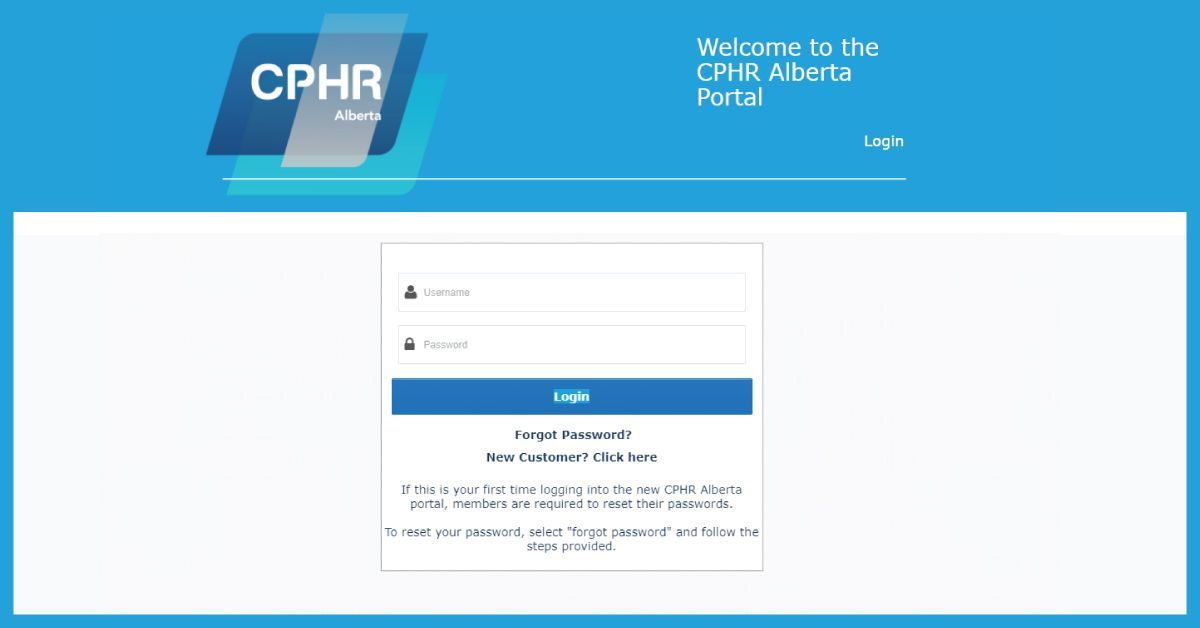
A screenshot of a cphr website with a login page.

On January 6, 2022 the CPHR Alberta team held a webinar to explore the layout of our new portal.

We are excited for the opportunities this new system provides our members and will be rolling out additional features over the next several months.

Thank you to everyone who attended and for the great engagement we saw in the chat and Q and A. As we all navigate the new system it is important to share our learnings as it will often support others who are working through the same steps.

If you were unable to join but would like an overview of your portal you can watch the webinar recording on-demand here. If you are experiencing any issues or require assistance within the new portal please reach out to our staff via email at info@cphrab.ca and we would be happy to assist.

Our team will continue to provide information sessions on navigating different areas of the new portal over the next six months and we encourage you to attend the sessions that directly apply to or that would like to find clarity on.

Below we have included some great new features of our system as well as additional features that will be available in coming months.

Features of our new system:

CPD Logs

Submitting your CPD Log is quick and easy in the new portal. To complete submission of your log, you will sign into the system, click on Continuing Professional Development Log , add your remaining activities for the year, review all your recent activities recorded by clicking on the Summary of CPD Hours within your CPD log and then submit your CPD log as usual.

CPD logs can be submitted up to January 15, 2022, without penalty.

Please note that if you had previously worked on your 2021 log in our old system, any activity you recorded before November 12, 2021 was carried over into the new system.

If you submitted your 2021 CPD log in our previous system, we have submitted the log for you in our new system as well, so you are up to date! Thank you for submitting on time.

It is important for us to note that while the hours and dates were carried over, due to constraints on fields and conversion of data, the recorded descriptions were not converted over. If you would like a copy of the details from your profile in the previous system please let us know.

Event Registration

As we open registration for professional development and networking opportunities offered in January, they will appear in your member portal. You will no longer be redirected to complete registration and make payment; this will now be a one stop shop from registration to viewing your receipts and event follow up details. Events registered for through your portal that qualify for CPD hours will also be automatically added to your CPD log once attendance has been confirmed.

Members will also see workshops and orientations that they are eligible for such as the NKE prep workshops and Candidate and Chartered member orientations. A full history of your event activity will be available in your portal.

Communication History and Subscriptions

Member communication preferences will require updates. To update your subscriptions, click on “Communication Preferences” under the MENU.

A record of all e-communications received from CPHR Alberta, or our automated action system will be archived in your Message History, available in your profile. This will include your opt in options as well as receipts, event registration details, application submissions and more. If you missed an email or would like to review old details check the Message History block on your homepage for more information.

Application Updates

Any applications submitted through our system will be available in your applications block. This could include applying for membership, submitting a CPD log, requesting a category transfer, submitting your EVA or any other submissions. This section will also include a status report so you will be aware of the stage your application is currently in such as pending, approved, complete, etc.

Career Center

We are excited for the launch of a new career center later this month. Members will be updated once this feature is available.


The views and opinions expressed in this blog post belong solely to the original author(s) and do not necessarily represent the views and opinions of CPHR Alberta.



By Jessica Jaithoo May 5, 2026
Author: Nidhi Gandhi , 2026 Social Media Committee Volunteer Motherhood is often described as the world’s most demanding job, yet it rarely comes with a job description, a performance review, or a manual. It is a profound and often relentless act of stewardship that asks us to be an anchor, a strategist, and a source of support, sometimes all at once. For modern HR executives, this reality carries added complexity. Our professional lives are spent navigating organizational health, talent development, and culture. We shape workplace policies, advocate for employee well‑being, and bring the people perspective to the leadership table. When we step into the dual role of executive and mother, we aren’t simply balancing two lives; we are bringing together two complementary skill sets. As Deni Ruiz, Executive Director of People and Culture at Keyano College, explains: “In my role, I balance strategy with humanity, supporting leaders and employees, navigating change and complexity, and making tough decisions when needed. I am supported by an amazing team of professionals who care deeply for our colleagues, the College, and the community.” Being both an executive and a mother means showing up focused in the boardroom while also being a safe harbor at home. It requires constant recalibration and a willingness to redefine what success looks like at different stages of life. It also reinforces an important truth: empathy is not just a personal quality, it is a leadership asset. When we asked Deni how she transitions from mom mode to executive mode, she shared: “It’s less of a flip of a switch and more of a recalibration. I go from solving activities, snack logistics, and figuring out the root cause of meltdowns, to solving organizational challenges and understanding what motivates and engages people in the workplace. But at the core, both roles are about supporting people and making good, informed decisions, just at different complexity levels. A deep breath, a chai latte, and I’m in an executive mode. What I find a bit more challenging is transitioning back to ‘mom mode’ at the end of a long, busy day.” In this conversation, we look beyond titles to discuss the realities of nurturing a high‑level career while raising the next generation. Whether you are climbing the ladder, building a team, or navigating your own career path, this dialogue offers both reflection and reassurance that your path can evolve, and that is okay. How has motherhood shaped your approach to HR policies? Does it change how you view things like flexible work, benefits, or performance management? Motherhood has deepened my understanding of how policies land in real life. It’s made me more attuned to what employees are balancing outside of work, including growing demands related to child care, elder care, and mental health. That perspective has strengthened my support for flexible and inclusive workplaces, not as perks, but as tools for retention, productivity, and respect. Being a mom hasn’t lowered performance expectations; it has clarified how we enable people to meet them by recognizing the realities that shape today’s workforce and equipping leaders to respond thoughtfully. What is the most rewarding “full circle” moment you’ve had where your professional role and motherhood intersected? There are moments when I’m coaching my kids on family values, goal setting, or how to navigate conflict with their sibling, and other moments when I’m coaching leaders through difficult workplace conversations or career development decisions. I’ve realized I draw on the same patience, clarity, and empathy in both settings. Seeing those conversations handled well, and knowing they positively affect someone’s experience at work, feels like a true intersection of both roles. Just as each child is different, even within the same family, employees experience work differently. Understanding those realities helps build alignment and trust. What advice would you give to a mid ‑ career HR professional who is hesitant to pursue an executive role because they fear it will compromise their family life? It’s a valid concern. Executive roles come with more responsibility and mental load, but they also offer greater autonomy to shape how and when you work. The key is being intentional. Be clear on your non‑negotiables, choose organizations whose values align with yours, and remember that strong leadership includes modeling sustainable ways of working, not constant availability. If you could give a Mother’s Day gift to working moms, aside from a day off, what would it be? I’d give them the freedom to be genuine and true flexibility, the kind that is trusted, consistent, and free from career trade‑offs. When people don’t have to choose between being present at home and being seen as committed at work, that’s where working moms can truly thrive. The idea of perfect work‑life balance is overrated. Priorities shift over time, and only you and your family know what the right combination looks like in any given season. Deni’s journey reminds us that senior leadership and motherhood are not competing forces to be managed, but complementary roles that strengthen one another. The empathy cultivated at home makes us better leaders, just as strategic thinking at work helps us build stronger foundations for our families. As we celebrate Mother’s Day, let this conversation prompt reflection. You do not have to choose between being a successful professional and a present, nurturing parent. You can be both, and you can lead through both.
By Jessica Jaithoo April 21, 2026
Author: Taia Northrup , 2026 Social Media Committee Volunteer Building Safer Workplaces Every April 28th, World Day for Safety and Health at Work serves as an important reminder that workplace safety isn’t just a policy, it is a commitment to people. While procedures, protocols, and compliance requirements are essential, the true foundation of a safe workplace lies in a culture where employees feel valued, heard, and protected. In today’s evolving environment, safety goes beyond hard hats and hazard signs. It includes psychological safety, inclusive practices, and the ability for employees to speak up without fear. As organizations continue to adapt in a tech driven world, the role of Human Resources in shaping and sustaining this culture has never been more critical. Traditionally, workplace safety has been associated with physical risk prevention. While this is still vital, modern organizations are expanding their focus to include mental health, preventing burnout, and overall well-being. Which Leads to the Culture of Psychological Safety A truly safe workplace is one where employees feel comfortable sharing ideas, raising concerns, and admitting mistakes without fear. Psychological safety is essential for innovation, collaboration, and overall organizational success. Safety doesn’t always require large scale initiatives… Often it is small, consistent actions that make the biggest difference, these include: Checking in with employees regularly Offering training and refreshers Celebrating safe practices and milestones Creating opportunities for feedback As we recognize World Day for Safety and Health at Work, it is an opportunity to reflect on how we can continue to build safer, healthier workplaces. By prioritizing both physical and psychological well-being, organizations can create environments where employees thrive. At its core, safety is about people. When we lead with empathy, listen with intention, and act with purpose, we don’t just meet safety standards, we exceed them!
April 21, 2026
Chartered Professionals in Human Resources (CPHRs) bring a unique and deeply relevant skill set to senior governance roles—particularly those focused on equity, inclusion, and systemic change. With expertise in ethical leadership, organizational governance, people systems, and inclusive decision‑making, CPHR professionals are well positioned to contribute at the highest levels of public service. The Government of Canada is currently seeking applications for the role of Chairperson of the Canadian Race Relations Foundation (CRRF) Board of Directors, a Governor in Council appointment that offers an opportunity to shape national conversations on race relations and advance meaningful change across Canada.
MORE NEWS