
Embracing Change and Driving HR Forward

Lessons from DisruptHR YEG 12.0

Author: Amanda Tam


A disruption is a major disturbance that interrupts an activity, event or process. But what does being an HR Disruptor mean? It isn’t only about using new tools but rather challenging norms and traditional ways of doing things to promote new ways of thinking to redefine the workplace. 


What is DisruptHR?  

Disrupt HR is an information exchange showcase designed to re-ignite thoughts and empower people in the HR field. A series of 12-15 speakers have 5 minutes each with 20 PowerPoint slides that rotate every 15 seconds. What’s the intention, you ask? Simply to promote a new way of thinking across multiple HR functions. 


Sharing My Disruptive Learnings 

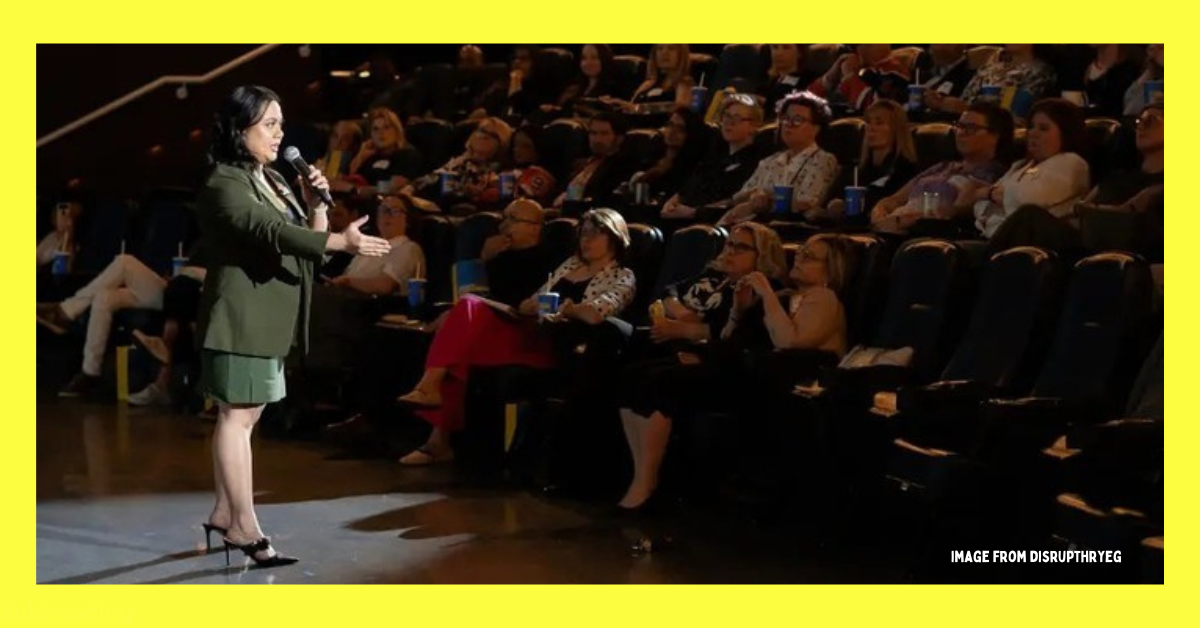
I had the opportunity last year to attend DisruptHR YEG 12.0 in Edmonton, hosted by the HR Disrupt YEG team. A lineup of thought-promoting speakers, the chance to connect with other like-minded HR professionals and food - what better evening could I experience? (They even updated us with the scoreboard during the Oilers' glorious playoff run.)


Disrupt 12.0 left me with a lasting impression of new insights that I can use to influence both my personal & professional life (and, of course, as an HR professional): 

  1. Work-life integration > work-life balance: Allow space for both work and your personal life so that you can feel fulfillment in both. Higher personal and professional productivity will lead to higher satisfaction. Make sure you celebrate your own wins! 
     
  2. Imposter Syndrome: Many of us still experience self-doubt even in areas that we're excelling at. Even the people that we hold in a high regard experience it. Learn to confront some of these deeply ingrained beliefs about ourselves. 
     
  3. The future: The pandemic and Gen Z's have truly questioned the way that things have 'always' been done in the workplace. Contrary to belief, they're not holding us back but pushing us forward! 


Potential HR Disruption - What can you do?:  

Embrace and utilize AI:  Many fear that human-centric functions are going to be replaced by technology and artificial intelligence (AI). But let's disrupt these fearful thoughts and re-define the narrative that AI can instead automate, streamline and increase efficiencies to free up time spent on monotonous tasks so we can better focus on our strengths, creativity and innovation. 
 

Championing Diversity & Inclusion:  Historically, many individuals have experienced discrimination because of their backgrounds, identities, disabilities, lived experiences or other characteristics. How can you acknowledge that systematic barriers, biases and stigmas still continue to exist? Diversity, equity, equality and inclusion aren't just words on paper but we should continue to have discussions on actions that we can take to incorporate multiple perspectives to ensure that people have equal access and opportunity. 
 

Redefining Performance Management:  Feedback shouldn’t only be provided annually in order to dictate a salary raise. Rather, continuous feedback, learning, recognition and engagement are all essential key factors in performance management. Hold people accountable in improving, growing and developing their skills or meeting their goals. 


DisruptHR reminds us that HR is about constant evolution. We're challenged to think differently and embrace new ideas. If you're ready to join the conversation, CPHR Alberta is excited to host DisruptHR YYC 12.0 in Calgary on April 15, 2025. And for those in Edmonton, tickets for DisruptHR YEG 13.0 go on sale March 19th, with the event on May 21, 2025. We hope to see you there, ready to disrupt!


This blog was written by Amanda Tam, a member of the Social Media Committee at CPHR Alberta.   


The views and opinions expressed in this blog post belong solely to the original author(s) and do not necessarily represent the views and opinions of CPHR Alberta.


By Jessica Jaithoo August 19, 2026
Author: Kanwaljit Chaudhry We often begin developing leaders after we have given them something to lead. Someone is promoted into their first supervisory role. They join a leadership development program, receive coaching, attend workshops, or are paired with a mentor. All of these can be valuable. But by then, leadership development has already been happening. Long before the title arrives, people are learning how to exercise judgment, influence others, navigate disagreement, take responsibility and make decisions when the answer is not obvious. The question for HR is: Do we have to wait for the title to help those capabilities grow? Create opportunities, not just programs Some of the most valuable leadership development happens through work itself. A stretch assignment. Leading a small project. Presenting an idea to senior colleagues. Coordinating people who do not report to you. Navigating competing priorities. Being trusted to make a decision rather than simply carrying one out. None requires a management title. HR can help organizations look at development as not only as courses people attend, but as experiences people need. That may mean encouraging managers to distribute meaningful opportunities rather than repeatedly turning to the person who is already proven. It may mean designing project work so different employees have opportunities to lead. It may mean making mentoring, coaching or job-shadowing available before someone enters a formal leadership pipeline. The objective is not to make everyone a manager. It is to give more people opportunities to build capabilities that will serve them whether or not formal leadership is their eventual destination. Make room to learn from experience Experience alone does not necessarily create development. Two people can go through similar experiences and take very different things from them. What often makes the difference is the opportunity to reflect: What worked? What didn't? What did I notice about myself? What would I do differently next time? HR can help make those conversations part of development rather than leaving them to chance. A manager checking in after a difficult project can ask more than, “Did we deliver?” A mentor can help someone examine why a conversation went differently than expected. A performance discussion can explore not only what someone accomplished, but how they influenced others, exercised judgment or responded when things became uncertain. These are relatively small interventions. But they help turn experience into learning. Notice leadership before it becomes obvious There is another role for HR: helping organizations broaden what they notice. Potential does not always announce itself loudly. The person who volunteers to coordinate a complicated piece of work may be demonstrating leadership capacity. So might the employee who brings people together when a team is stuck, asks the question no one else is asking, helps a colleague succeed without needing credit, or remains thoughtful when everyone else is rushing toward an answer. If we look for leadership potential only among those who already resemble our current leaders, we may keep finding the same kinds of people.  Creating broader opportunities allows capability to become visible before we decide who has it. Pay attention to what the organization teaches Organizations are also developing future leaders when they are not deliberately trying to. Employees notice who gets promoted. They notice what behaviour gets rewarded, whose ideas receive attention and what happens when someone makes a mistake. They notice whether managers share information or protect it, whether difficult conversations are avoided or handled respectfully, and whether asking for help is treated as good judgment or weakness. These observations become lessons about what leadership looks like here. HR influences many of the systems through which those lessons are reinforced e.g., performance management, recognition, development, succession planning and promotion among them. That makes an important question worth asking: What are our people learning about leadership from the way our organization actually works? The answer may tell us as much about our leadership pipeline as any competency framework. Before the title Leadership development does not have to begin with a leadership program. It can begin when someone is trusted with something slightly beyond what they have done before and supported while they figure it out. It can happen when a manager shares the reasoning behind a difficult decision rather than only communicating the outcome. It can happen when someone gets to lead a project before they have people reporting to them. And it can happen when an employee has someone who helps them make sense of an experience rather than simply move on to the next task. HR cannot manufacture leaders. But HR can help create workplaces where people have opportunities to practise judgment, responsibility, influence and reflection long before a title makes those things part of their job description. Perhaps the question is not only “Who are our future leaders?” It is also: “What are we doing today that gives future leadership capacity a chance to emerge?”
By Marina Perkovic July 22, 2026
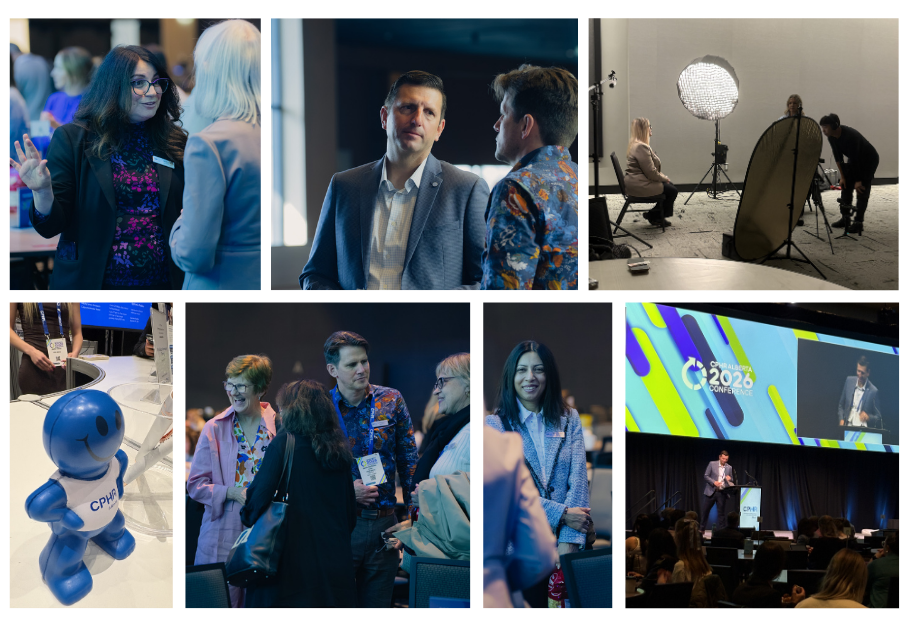
At the CPHR Alberta Conference, we asked HR leaders one question: What leadership capability matters most for the future of your organization? Leaders picked up a star and placed it beside their answer. By the end of the conference, HR leaders cast 131 votes across 16 capabilities. Three stood out, with two tied for first place. Here is what they told us. What the Data Showed The capabilities on the board came from Bright Wire's PLUS Leadership Framework, a proprietary model built to define what effective leadership looks like across every level of an organization and is organized across four dimensions: Courageous Coach-Like Disciplined for Results and Relational The results below reflect the capabilities HR professionals believe matter most. 
By Jessica Jaithoo July 9, 2026
Author: Robin Daultani Mental health support. Fitness benefits. Stress management resources. Workplace wellness programs have evolved significantly over the past decade. Yet one foundational pillar of employee health and performance remains conspicuously absent from most wellness strategies: sleep. The cost of this gap is staggering. A landmark RAND Corporation study¹ found that insufficient sleep costs the Canadian economy up to $21.4 billion annually, through a combination of absenteeism and reduced productivity. A Gallup study² reinforced this finding, showing that poor sleepers report more than double the rate of unplanned absences compared to other workers. And a 2026 Wellhub study³ found that 83% of employees identify poor sleep as a contributing factor to burnout, a figure that demands attention when nearly nine in ten employees report burnout symptoms annually. Consider what this looks like in practice. A team member who slept poorly scrolls through emails at 7am already feeling behind. By mid-morning, a decision that should take minutes stretches into a 45-minute deliberation. After lunch, focus drops sharply, not because of the workload, but because the brain is running on insufficient rest. By 3pm, a second coffee masks the fatigue but does nothing for the impaired judgment underneath. Research shows that after 17 hours of continuous wakefulness, the equivalent of a normal waking day ending at 11pm, cognitive impairment matches that of someone who is legally intoxicated⁴. This is not an unusual day. For many employees, this is every day. Sleep rarely appears on the wellness agenda, leaving a significant and measurable performance gap unaddressed. The reason is partly cultural. Sleep is still widely perceived as a personal responsibility. But the research suggests otherwise: sleep is not a personal indulgence. It is a performance lever that affects every metric HR professionals are already tracking: productivity, absenteeism, burnout, and retention. The same RAND study¹ that quantified the cost of insufficient sleep also found the flipside: if Canadians who sleep under six hours started sleeping just one hour more per night, it could add $12 billion to the national economy. The returns are not theoretical. They are measurable, achievable, and waiting to be captured. The good news is that addressing sleep does not require a major overhaul of existing wellness programs. Organizations can start by simply putting sleep on the wellness agenda. Most workplace wellness surveys ask about stress, mental health, and physical activity. Adding questions about sleep quality or duration to existing wellness assessments can provide baseline data to identify and measure the scope of the issue within their workforce. Leaders and managers who openly prioritize rest and recovery give permission for the rest of the organization to do the same. Small cultural shifts like discouraging late-night emails or respecting boundaries around after-hours communication can quietly improve sleep conditions across an entire team. None of these require a budget. They require intentional inclusion. Now consider what becomes possible. A team member, after two weeks of consistent, quality sleep, arrives at work already focused. The mid-morning decision is made in minutes. The afternoon dip is manageable, not debilitating. The second coffee becomes optional, not essential. Nothing else about their workload or responsibilities has changed. They show up more empathetic and more present for their customers, peers, and family. The only difference is how well they slept. The performance gap between these two versions of the same employee is not marginal. It is the difference between surviving and thriving. The question for HR professionals is no longer whether sleep affects organizational performance. The research has answered that definitively. The question is whether sleep has earned a place in their wellness strategy. And if not, what that gap is quietly costing their organization.
MORE NEWS